
Welcome to Washington Open MRI
Home of The World’s Most Advanced MRI Scanner
Enjoy The Freedom of a truly Non-Claustrophobic Open MRI Scan™.
OPEN MRI
Open MRI technology offers a significant advantage by allowing scans to be performed in an upright, weight-bearing position. This helps reveal spinal injuries and conditions that may not appear during traditional, lying-down MRI scans.
For example, disc herniations that retract when lying flat or spinal canal narrowing due to gravity (spinal stenosis) become more visible in an upright position. Dynamic imaging also helps detect instability during movement, such as cervical cord compression when the head is flexed or extended.
The fully open design is comfortable and claustrophobia-friendly, making it ideal for larger patients or those anxious about enclosed spaces. With no tunnel or tube, patients are more relaxed, leading to better compliance and more accurate results.
Posture-based visibility aligns well with chiropractic care, offering clearer insight into disc bulges, nerve compression, vertebral misalignment, and other conditions often missed in conventional MRIs.

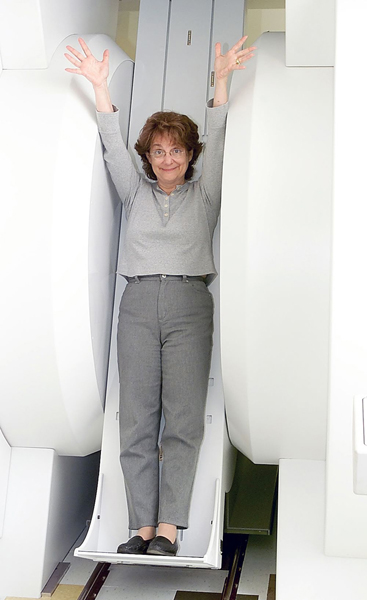
STAND-UP OPEN MRI
The revolutionary scanner features the only MRI-compatible, motorized, multi-positional, patient positioning system, which has been engineered to be fully functional Inside the scanner’s magnetic field. It can position the patient for the full range of conventional “lie-down” MRI scanning, or upright for weight-bearing studies. The full length of the spine can be imaged in the normal weight-bearing posture, even with the patient touching their toes for full flexion images of the lumbar spine. Unusual patient positions that are impossible on conventional “lie-down” MRI scanners are routine on Washington Open MRI’s new Stand-Up Open MRI.

Take a Look at One of Our Facilities
The World’s Most Advanced MRI Scanner
Enjoy The Freedom of a truly Non-Claustrophobic Open MRI Scan™.


What our Patients say about Us
Excellent and a piece of cake, given that I am claustrophobic. ( Last year I had two standard MRIs for my shoulder and scapula at a different site and it was difficult. Those showed arthropathy around the AC joint and a labral tear with small adjoining cyst.) Here it was easy to sit down for the procedure, which lasted 20 minutes. Radiologist/technician was professional and announced each phase of the MRI pulses and their duration. The office associate/receptionist (Sandra?) was also very pleasant and attentive. I was given a disc of the MRI and am waiting to receive the written radiologist report through my doctor, the prescribing physician for the MRI.
This place is the best the employee Brian is the best guy who takes the MRI I can’t say enough about him great and caring and make you feel at ease just a great guy all around just want to say To thx you from the bottom of my heart.
This was the best experience I have ever had. Having had a previous stage 3 brain injury 8 years ago and asthma, I have developed severe claustrophobia and impulse control. I would have never had an MRI done had it not been for Washington Open MRI. You guys are the BEST. My experience was awesome form the time I got there with the receptionist to Mr. Victor who words can not express his compassion and professionalism. I would give this man 100 stars. Much appreciated…
The 2 employees that helped me during my appointment on 3/4 at 8am were exceptional! They were professional, caring, personable and knowledgeable. I was very impressed with the level of comfort. I have been to other facilities similar to WOMRI and they can feel ‘run of the mill’ or factory like – WOMRI did not, the staff was above & beyond. I also wanted to note how clean the facility was. Thank you!
This was my first time going to WASHINGTON MRI IN OWINGS MILLS .. I am so claustrophobic, when I was there on 07/12/19, I was scared, the secretary , the tech and the doctor was very professional, helpful, kind and greet me with a smile. I was so very pleased and comfortable. I had to get a head MRI and had to have a like a hockey helmet on…. the technician did not mind letting me try it on and just sitting there for a few minutes. It takes a lot of patience to work with someone who is claustrophobic.. My MRI was excellent with no problems. ANYONE WHO IS CLAUSTROPHOBIC.. GO TO WASHINGTON MRI OWINGS MILLS. they have other places too, I WAS PLEASED AND WILL ALWAYS GO THERE. also while you are sitting or standing for your MRI you can watch TV (really it’s true) I TRULY RECOMMEND WASHINGTON MRI IN OWINGS MILLS TO MY FAMILY AND FRIENDS .. THANK YOU ????????????????????????
Not only is it a true OPEN MRI their service is amazing shanice is a god’s gift truly an angel she took very good care of me from scheduling my appointment and helping me through my process of getting my MRI. Quick and easy check in process helped with my paperwork she was just simply a blessing 10 stars.
My experience was very good. The technician and everyone there were very professional and courteous. If I need the service again I will definitely be back. Thanks!
I was skeptical at first of the new stand-up technology, but the ability to watch television during my knee scans certainly reduced my anxiety level. My doctor was also impressed at the quality of the images and the ability to scan me in the standing position. The technician was knowledgeable and put me completely at ease during my scan.
The world’s most advanced MRI scanner that can scan patients in the sitting or standing position. Patients can even watch TV during their scan! We are the only positional, weight-bearing scanner available within 200 miles of the Washington, DC area.
The staff are amazing, very professional and reassuring during procedure. Everything went smoothly, from scheduling to checking out, I highly recommend Washington Open MRI!
Perfect option than the traditional MRI. The overall experience was phenomenal! Technician was SUPER nice & VERY professional. Back office staff were helpful as well. A BIG shout out to Marisella of Rockville location for telling me what to do for insurance to re-assign approval. Thank you SO much & will definitely use you again.
This open MRI is the best option for people like me who “freak out” when going into that “tunnel” machine.
You actually sit up and can watch TV.
The owner, Bill Kisse is on premiss and the operator is very patient friendly. Front desk young lady also pleasant. Easy drive in and park in front.
I had a really good experience. This will be my go to for any future MRI’s…not that I plan on having any but…..the office staff and techs are extremely friendly, respectful and understanding. I felt safe during this COVID time. If you need an MRI — whether you are claustrophobic or not — I would recommend them.
I had an excellent experience with Open MRI Rockville! I had been putting off doing a traditional MRI because of anxiety due to claustrophobia and was so happy to have discovered Washington Open MRI – and especially Technician Brian who made the process easy! From my initial phone consult with Technician Brian to when I arrived for my appointment and throughout the process he gave me reassurance which put me at ease. Staff was friendly and efficient with handling all the paperwork. I got to watch TV – with closed captions. The noise from the machine was like a meditation zoning sound. Friend able to sit in room with me. Window in the room provided sunlight. Comfortable sit up with foot and arm rest. I highly recommend them.
I switched to this MRI provider because of cost. Even though I have good health insurance, the provider near me would have cost me $ 500 out of pocket: all of my $300 annual deductible and another $200 on top (15 % of costs after deductible was met). This place only cost $200 out of pocket. I had a good experience. Although I’m not especially claustrophobic, it was nice to sit in an open room rather than lie down in a tube, and the MRI didn’t seem as loud.
Awesome I’m a big guy and don’t like small spaces. 30 minutes and I was done. Great staff
Washington Open MRI staff was very professional and knowledgeable and helpful if your claustrophobia been going there over 3 yrs and will continue very satisfied with the staff and clean office will continue to do my MRI at this location and have refer them to others
My wait was short and the receptionist was very friendly. Mri went quickly and my technician Brian was patient and helpful. Very pleasant experience.
Really really really nice, down to earth staff. Super efficient, like unseen anywhere. I walked in, they already had my pre completed online paperwork out and prepared, NO wait time AT ALL. There was a TV to watch during my entire imaging session, and there was continuous communication throughout the entire process. It was so quick! I was really happy with my experience!
My appointment started on time and was handled efficiently. Staff were very professional, accommodating and friendly. The open MRI is great.
First thing and foremost the staff was very professional very courteous and was very concerned if any problems that I might’ve had or questions the office was very clean I felt comfortable and safe in the environment and they cleaned up after I touched anything your safety and the office is their first concern and it really shows they have a great staff and courteous staff I highly recommend it and I would be happy to use his facility again in the future if it is needed
I was very happy with my MRI experience. I usually need to take an RX for anxiety. The machine was open and I felt great. No need for medication. The technician was friendly and calming. She explained every step including how long each scan would take. The entire facility was friendly, clean, and relaxing. The entire staff was friendly and professional.
Very professional and timely service. Been to this place 3 times in the past and very happy with the service. Mr. Victor who handles the MRI is very nice and professional at his work. Highly recommend this place.
Our daughter needed an MRI. We originally had it scheduled at another imaging center. Because our insurance is horrid it was going to be over $1400 out of pocket. So we started to research other facilities and discovered Washington Open. I called and LaToya was amazing in helping me get our insurance approval switched from the first facility to theirs. She got us on the schedule as quickly as she could and gave me her direct line if I needed anything. Then got on the phone with our insurance company to facilitate the whole thing. She’s unbelievable. Then once the MRI was concluded and we were waiting on the report I had to call back because we didn’t have it yet and needed it for our appt that afternoon with the orthopedist. I spoke with (I think) Bill who assured me he would flag it as a priority and gave me his cell phone if it wasn’t to our dr by 3. Amazing. And the cost was SO MUCH LOWER. I was worried the quality wouldn’t be as good but the orthopedist was able to see her hamstring strain perfectly clearly. We highly recommend this place!
We were at the office 15 minutes early and we were in the MRI room with in 1 minute. Everything went well and we were really amazed how the people there really knew what they doing in a professional way. I would come back here with no problems at all. They were very knowledgeable and professional.
I’ve been to the Shady Grove office of Washington Open MRI a few times over the years. I went yesterday, and again was happy with their service. The staff and the technician were friendly, made me feel comfortable, and efficient.
Washington MRI all the staff there were very professional, comforting and pleasantly welcoming. I will refer family and friends.
I arrived early from out of town. Was able to go ahead and have my MRI early! Everyone was so nice and pleasant. Was in and out in just a matter of minutes and on my way back home!
This open MRI was very convenient to my home. Upon entering, Jennifer the receptionist was very friendly and, as I fumbled through my pocketbook looking for my ID’s, she was also very patient.
It was also gratifying that they use a ‘chair’ (no tunnel) and you can watch TV.
Daphne, the technician, thoroughly explained the process of the test. During each phase of the test, she made sure I was okay, comfortable and relaxed and advising me of the duration of each testing phase. The time of the entire test went quickly! I actually dosed a little…
The technician Daphne was so friendly and pleasant. This was definitely a very pleasant experience.
Washington Open MRI is great! Amazing staff, very professional and patient with me. I am claustrophobic and was pretty anxious about getting an MRI, and a little embarrassed for being so anxious about it. But the staff and technicians were great, they put my mind at ease and made me feel very comfortable. If you’re claustrophobic, this was pretty easy for me.. I was anxious but they made me feel comfortable and you get to sit there and watch TV while the test is going.. the machine is a little noisy but was an overall good experience thanks to a great staff.
And that kind of professional and courteous treatment goes all the way to the top. I called in recently to get a copy of an older report and the COO answered the phone since they were so busy and he was provided the exact same outstanding service as others I’ve worked with in the past there.
This morning I had an MRI at the Washington Open MRI location in Owings Mills. This email is sent to applaud the staff – from the check in to the completion of the MRI – the staff was polite, professional – and made me feel comfortable. So often in this season of added protocols and procedures — patients/customers walk into an environment where they already feel as if their presence is an inconvenience, not a priority. NOT TODAY — I felt welcomed, important, and as if my satisfaction was your Team’s primary focus. Thank you – Well Done.
I had a great experience. Kyna, the receptionist was extremely kind and helpful. Darryl, the technician, took time to explain everything to me. He made me feel extremely comfortable and safe. I highly recommend Washington MRI.
My appointment at the Greenbelt location was great. The staff was extremely nice and the scans were done efficiently and quickly. I will choose this location for my next MRI scan. Thanks so much!
Hi Bill.
I don’t know if you remember me, but we connected a while back and you were very kind to me. I hope you’ve been well through this crazy and difficult year!
I just wanted to let you know that I need another MRI, and although the doctor’s office tried to send me somewhere else, I will be calling your place hopefully later this morning 😨 to schedule. True believer in karma — and I have and will continue to refer you whenever I get a chance!
Enjoy the beautiful day and take care.🙏😊
If you need an open MRI, then I highly recommend the Clinton location of Washington Open MRI. The reception is kind and puts one at ease about the dreaded experience and made me realize that I was no exception at being anxious about to getting a MRI I got a immediate sense about the technician’s skill. He was kind enough to tell me how much time was left before the MRI was completed. This machine was more open the one in their Chevy Chase facility. I could look out the window while the machine was working.
Lots of parking and there a large shopping center nearby with Lowe’s, Starbucks, Safeway, etc.
I would definitely return to the Clinton facility even though the Rockville facility is closer.
This is my second visit to Washington Open MRI in Oxon Hill. I’m from VA and since they’re the closest (that I can find) Open MRI to me, the drive is worth it.
The staff at the Oxon Hill location is top notch, have always been super friendly and attentive from the time you walk in to the time you leave. Highly recommend.
I came here last week after a minor accident(Which I thought), Margie(The receptionist) is such a delight to meet. Well mannered, polite & helpful(I am saying this because she did help me as I wasn’t able to walk properly. The Technician Deiron is fantastic. I have never met an technician so skillful & knowledgeable yet humble & kind. I am claustrophobic & hate it when someone tries to squeeze me into a tube. However, it’s a different story altogether about this facility(Clinton). It’s Open MRI equipment was specially designed for people like me. Can’t thank you enough Guys.. Loved it. I would definitely recommend my friends/Family to visit them if they need any medical imaging service.
A wonderful experience! I have PTSD and dreaded the need for an MRI. Everyone at Washington Open MRI(Clinton)was courteous, professional and most especially compassionate in putting me at ease during my scan. I highly recommend them!
I cannot rate Washington Open MRI. The reception staffs were friendly and helpful; the MRI personnel were aware of my claustrophobia and helped me accordingly. Marvelous care and friendly approach to their patients!
Everyone at Washington Open MRI in Oxon Hill Md were beyond professional, courteous and helpful. I would recommend anyone who would be in need of their services to use Washington Open MRI in Oxon Hill Md
Wow, my experience was amazing. From the amazing receptionist to the technician that performs the procedure. They all were so kind, caring and attentive to your medical needs. Thank you Washington Open MRI in Clinton Maryland for the amazing service from beginning to end.
Great experience at Washington Open MRI. They were right on schedule, polite, and efficient. Had a Brain MRI with contrast and got in and out in less than 45 minutes. Also a great option for anyone who is claustrophobic. MRI was done seated with nothing directly in front of you. You can see the operator and watch TV during the procedure
I have claustrophobia and tried to have MRI the previous week but freaked out. My Dr would only give me one Valium so when I got there, I was still anxious. The lady tech was extremely helpful! I asked her to put me in position very slowly and she did. She also backed out when I requested as well as comforting me continuously, which was Very helpful. I wish I could remember her name, she was so nice. I couldn’t have gotten the MRI done without her. She’s an angel!
The staff were helpful and answered all my questions. I am sure they could tell I was very nervous but when I saw that the MRI was a sitting machine (also used for the laying down position), I was ecstatic. Just knowing that I could stand up and walk away if anything happened eased my mind tremendously. And the cherry on top…i could watch t.v. at the same time I was doing the MRI! Finally, as nervous and claustrophobic as I am, even in a laying down open machine, I could never, ever, go to sleep! Today, though, I caught myself almost nodding off twice! Washington Open MRI, going forward, will be my preferred go-to center. I am truly impressed by them!
This was a repeat visit to Washington Open MRI in Brandywine. The facility has been upgraded since my previous visit and most of the staff appears to be new. I am seriously claustrophobic and I make it known when necessary. Susan, the technician is phenomenal!!! She has more patience than almost anyone I know. She listened to me and explained everything that was going to happen and did a practice before each MRI started (I had to have two (2) done, each separately) to insure I was comfortable. Throughout the entire process Susan gave very encouraging and reassuring words, as well as the progress of each one. She makes a very professional appearance, as well as in her manner of speaking. I would have her again in a heartbeat if I needed another MRI! Kudos to Susan in Brandywine!
Wow! Super nice experience! Excellent service from the staff in the front desk. Excellent service from the scan technician; she was calm, she was patient, she explained everything well. AMAZING SCAN TECHNOLOGY MRI- not trauma. The facility was clean. Congratulations and keep it on!!!
From the friendly faces greeting my husband and I walking through the door to the goodbyes as we left, it was a five-star experience. I was scared and concerned about how much discomfort I might experience. My MRI was sitting down due to back pain lying down. The tech, Opal, explained the whole process to me and took care to see I was as comfortable as possible. She informed me how long each portion of the test would be and checked to make sure I was doing ok along the way. She was exceptional and I would recommend Washington Open MRI to ANYONE that needs an MRI. Thank you for making my experience such a positive one.
This place is The Best!!! They have definitely made a forever customer out of me. The two ladies running the business are extremely pleasant and Listened to my concerns, which made me feel comfortable. Normally I would have tremendous anxiety with an MRI appointment. That’s even with my husband with me and a pill for my nerves. This time I drove myself and told my husband, I’ve got this. I didn’t even need my anxiety pill. My husband was totally shocked. I will need a couple more MRI’s in the coming months. Washington Open MRI is where I will be!!! Peace and Blessings to the staff.